

By Olayemi Adurota, DNP, PMHNP-BC, FNP-C · September 8, 2026
Mental health professionals evaluate and treat many different conditions.
Depending on the provider's training, scope of practice, and the patient's individual needs, treatment may address conditions including:
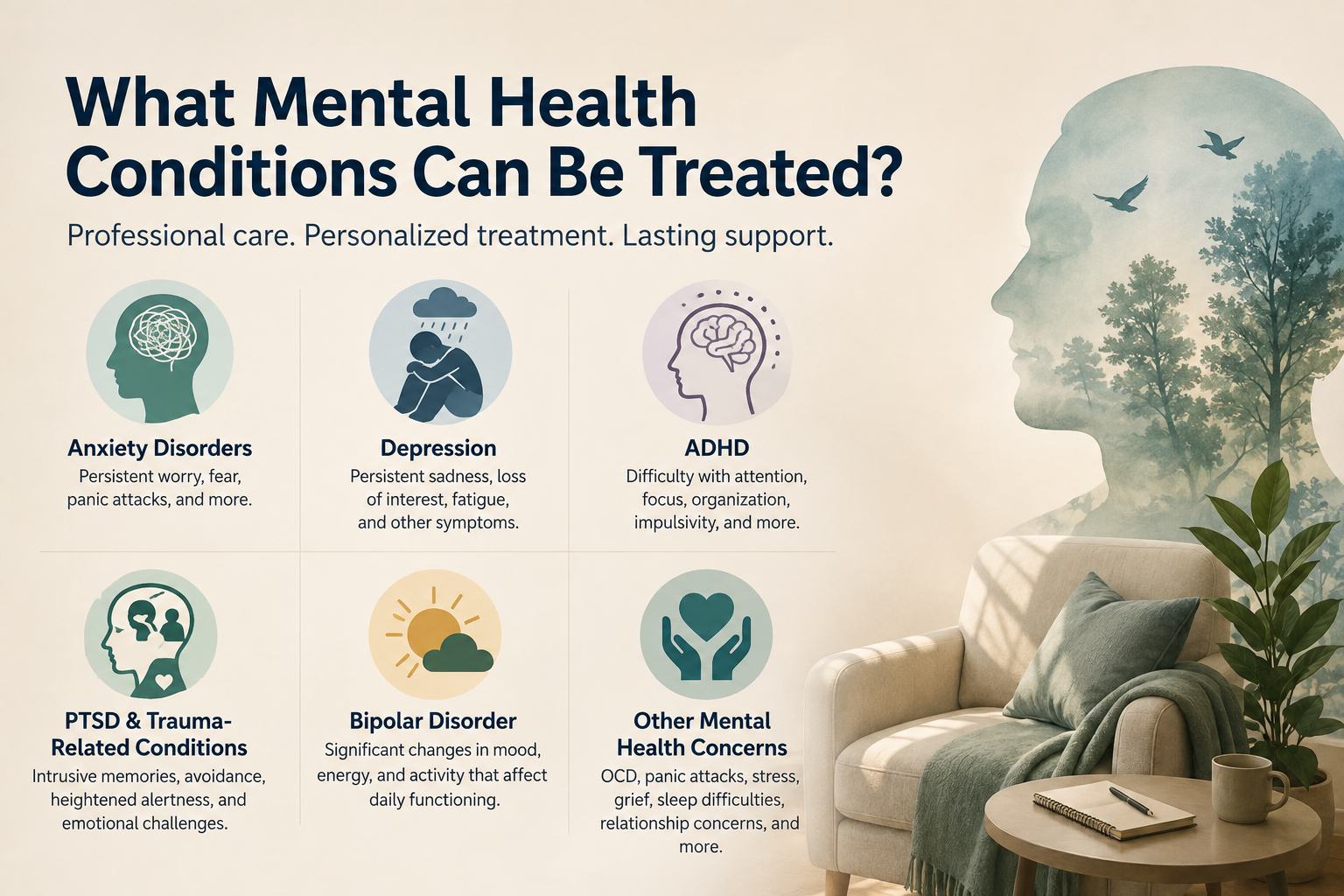
Anxiety Disorders
Anxiety can involve persistent worry, nervousness, physical tension, difficulty sleeping, racing thoughts, avoidance, or fear that feels difficult to control.
Some people experience generalized anxiety, while others experience panic attacks, social anxiety, phobias, or anxiety associated with another mental health condition.
Professional anxiety treatment may include psychotherapy, behavioral strategies, medication when clinically appropriate, or a combination of approaches.
Depression
Depression is more than simply having a bad day.
Symptoms may include persistent sadness, decreased motivation, loss of interest or pleasure, fatigue, changes in sleep or appetite, difficulty concentrating, feelings of guilt or worthlessness, and other emotional or physical symptoms.
A mental health professional can evaluate whether symptoms are consistent with depression and recommend an individualized treatment plan.
ADHD
Attention-deficit/hyperactivity disorder can affect children, adolescents, and adults.
Symptoms may involve difficulty sustaining attention, disorganization, forgetfulness, impulsivity, restlessness, procrastination, or difficulty completing tasks.
Because several other conditions can produce symptoms that resemble ADHD, a comprehensive evaluation is important before establishing a diagnosis or treatment plan.
PTSD and Trauma-Related Conditions
Traumatic experiences can affect people in different ways.
Some individuals develop intrusive memories, nightmares, avoidance, emotional numbness, heightened alertness, irritability, anxiety, sleep disturbances, or other symptoms following trauma.
Trauma-informed mental health treatment focuses on understanding symptoms within the context of the individual's experiences while promoting safety, coping, and recovery.
Bipolar Disorder
Bipolar disorders involve significant changes in mood, energy, activity, and functioning.
Because symptoms can sometimes overlap with depression, ADHD, anxiety, substance-related conditions, or other psychiatric disorders, an appropriate psychiatric assessment is important.
Other Mental Health Concerns
Professional behavioral health services may also help individuals experiencing obsessive-compulsive symptoms, panic attacks, stress-related problems, grief, sleep difficulties, relationship concerns, and other emotional or behavioral challenges.